

On this page8 parts
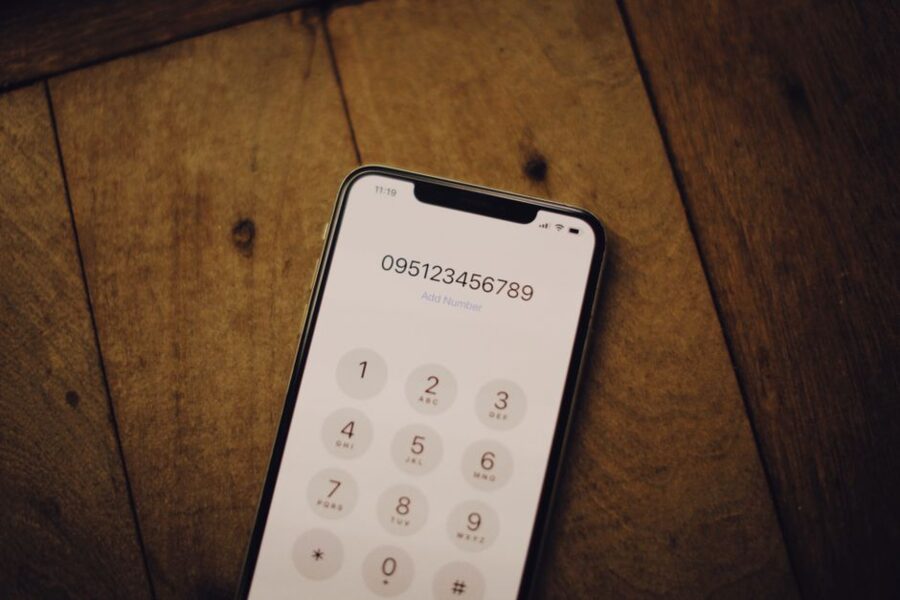
Every phone number you collect in Japan, from the hotel confirmation to the taxi company’s card, starts with a 0. Inside the country that 0 tells the network the call stays in Japan. From abroad, or from a phone running on a foreign SIM, you drop it and put +81 in front instead.
Save your numbers that way before you fly and dialing stops being a puzzle. What is left is knowing which numbers reach the police and an ambulance, and whether you need a Japanese number of your own. Most visitors don’t.
How a Japanese phone number is built
A landline number has ten digits counting the 0. The Ministry of Internal Affairs and Communications calls that 0 the domestic prefix: a signal to the network, not part of the area code. After it come the area code and the local exchange, five digits between them, then four for the subscriber.
Big cities get short area codes. Tokyo is 03 and Osaka 06, so a Tokyo number is written 03-XXXX-XXXX; Yokohama is 045 and Kyoto 075, while smaller places run longer, like Matsumoto’s 0263. The ministry’s own phone number Q&A adds a detail I like: the first digit of the area code rises as you travel south, which is why Sapporo is 011 and Naha 098.
Signs and business cards print the full number with hyphens, or with the area code in brackets: (03) XXXX-XXXX.
Mobiles: 090, 080, 070, and soon 060
Mobile numbers are eleven digits and start 090, 080 or 070. Numbers move between networks, so the prefix tells you nothing about the carrier: treat all three as “a mobile”.
A fourth prefix is coming. The ministry approved 060 mobile numbers on December 20, 2024 because the old ranges are filling up. Docomo, KDDI, SoftBank and Rakuten Mobile planned to issue them from July 2026, postponed that on July 8, 2026, and the ministry wants them ready by the end of March 2027. An 060 number on a booking after that is an ordinary mobile.
The numbers that are not landlines or mobiles
| Starts with | What it is | Digits | Who pays |
|---|---|---|---|
| 03, 06, 045, 075 and other area codes | Landline | 10 | Caller |
| 090, 080, 070 (060 coming) | Mobile | 11 | Caller |
| 050 | Internet phone line (IP phone) | 11 | Caller |
| 0120 | Free Dial, toll-free | 10 | The business |
| 0800 | Toll-free | 11 | The business |
| 0570 | Navi Dial, one number for a company’s call centers | 10 | Caller, at a rate the company sets |
| 1 and two more digits | Short service numbers such as 110, 119, 171 and 104 | 3 | Varies (emergency calls are free) |
Two of these catch visitors out. The 0120 and 0800 numbers on airline and courier pages cannot be reached from outside Japan, so if one won’t connect, look for the ordinary number printed beside it. And 0570 Navi Dial numbers cost the caller money and sit outside the free calls in most Japanese mobile plans, so a long hold on one is never free.
Dialing in and out of Japan
The rule is the same in both directions: the exit code of the country you are in, the country code you are calling, then the number without its leading 0. Japan’s country code is 81 and its exit code is 010. A smartphone’s + replaces any exit code, which is why I store every number as +81 and forget about exit codes.
| Calling | From | Dial |
|---|---|---|
| Tokyo landline 03-XXXX-XXXX | US or Canada | 011 81 3 XXXX XXXX |
| Tokyo landline 03-XXXX-XXXX | UK, most of Europe, China | 00 81 3 XXXX XXXX |
| Tokyo landline 03-XXXX-XXXX | Australia | 0011 81 3 XXXX XXXX |
| Japanese mobile 090-XXXX-XXXX | Any smartphone, anywhere | +81 90 XXXX XXXX |
| A New York number, area code 212 | Japanese landline or mobile | 010 1 212 XXX XXXX |
| A London number, 020 XXXX XXXX | Japanese landline or mobile | 010 44 20 XXXX XXXX |
Calling home from Japan
On a Japanese mobile, 010 or + both work: Docomo’s international calling page says to hold the 0 key for a +, add the country code and drop the number’s leading 0. Italy is the exception you may meet, because Italian landlines keep their 0.
From a hotel room phone, dial the outside-line digit before 010; the card by the phone says which. The hotel sets the price of calls abroad, so ask first. And mind the clock: Japan is nine hours ahead of UTC all year, with no daylight saving, so in July Tokyo is 16 hours ahead of Los Angeles.
Roaming in Japan on your home SIM
On a roaming SIM the +81 habit matters most. A number typed the Japanese way may or may not be handled correctly by your phone and carrier; the +81 version always is. Calling a travel companion’s home number while you are both in Japan is a roaming call at both ends, so use LINE, WhatsApp or FaceTime between yourselves.
When a call from abroad won’t ring
Japanese landline subscribers can block international calls to and from their line through the International Call Non-Handling Reception Center, a free service run by KDDI, SoftBank, NTT East, NTT West and NTT Docomo Business. Stopping calls from abroad is one of its options. So if a small inn’s landline gives you nothing from your home phone, it may simply not accept international calls: email it, or call once you are in Japan.

Emergency and help numbers
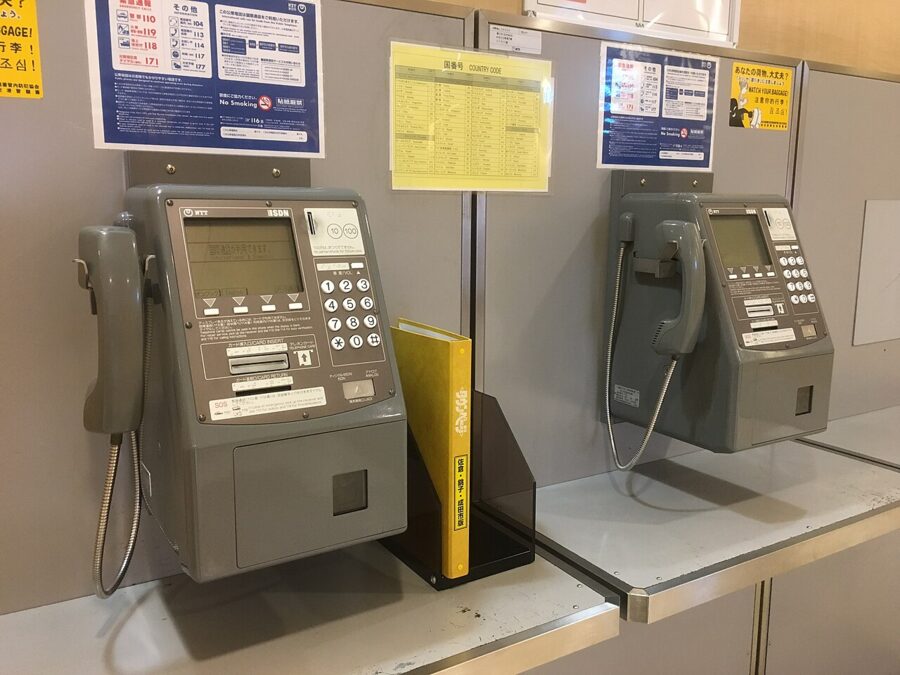
Japan splits emergencies across three numbers, and all three are free from any phone with a voice line, including payphones, where you need no coins or card.
| Number | For | Notes |
|---|---|---|
| 110 | Police: crimes, traffic accidents | Free. An interpreter can join the call. |
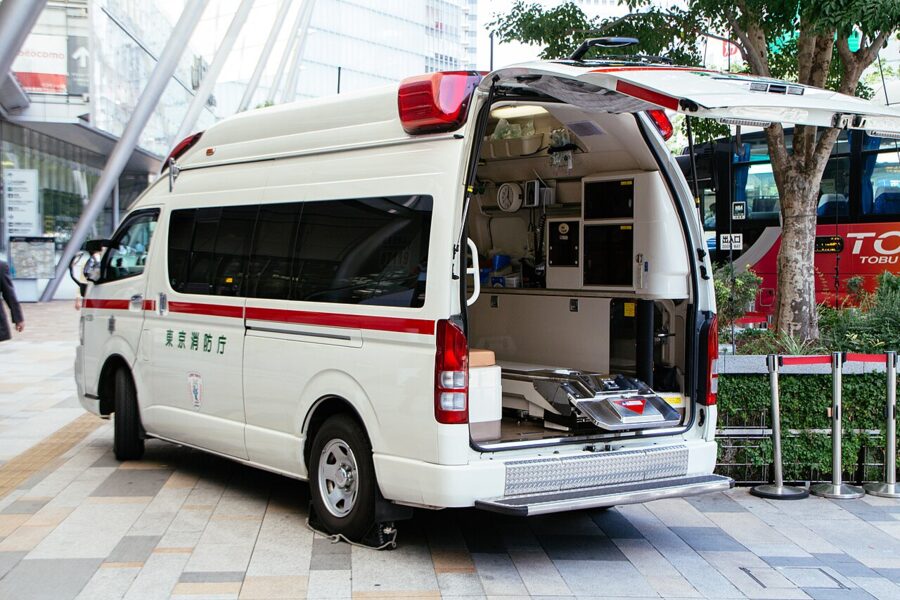
| 119 | Fire and ambulance | Free. Most fire departments add an interpreter. |
| 118 | Japan Coast Guard: accidents at sea | Free. |
| #7119 | Advice on whether you need an ambulance | 41 areas, not nationwide. |
| #9110 | Police advice for non-emergencies | Weekday office hours. |
| 171 | Disaster message dial | Opened only after a disaster. |
| 050-3816-2787 | Japan Visitor Hotline | 24 hours; English, Chinese, Korean. |
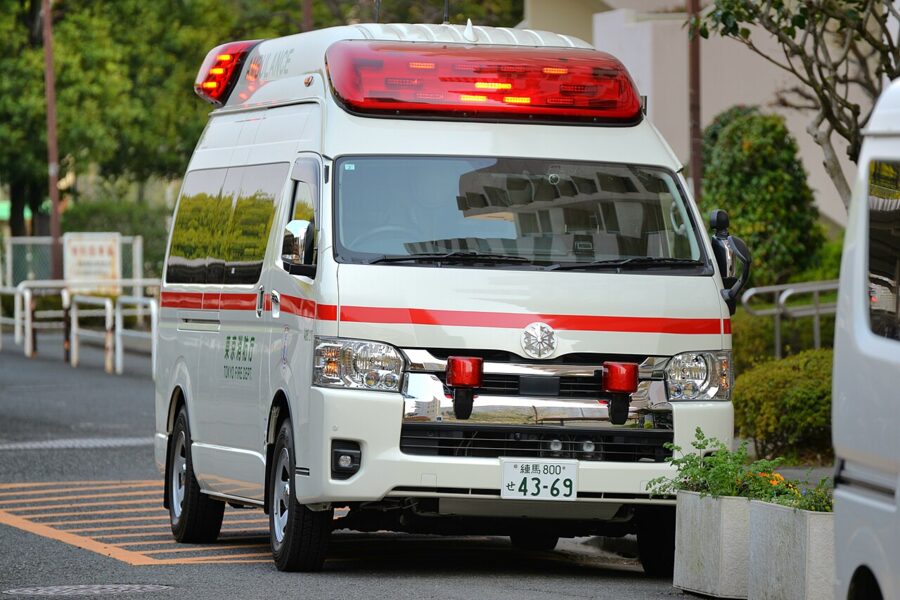

Calling 110 or 119 in English
You can. For 119, the fire department brings in a telephone interpreting center as a third party: as of January 1, 2025, 673 of Japan’s 720 fire departments had this three-way interpreting, and every one of them covers English, Chinese and Korean. Police do the same for 110, and Kagoshima’s English page on 110 asks you to hold until the interpreter speaks.
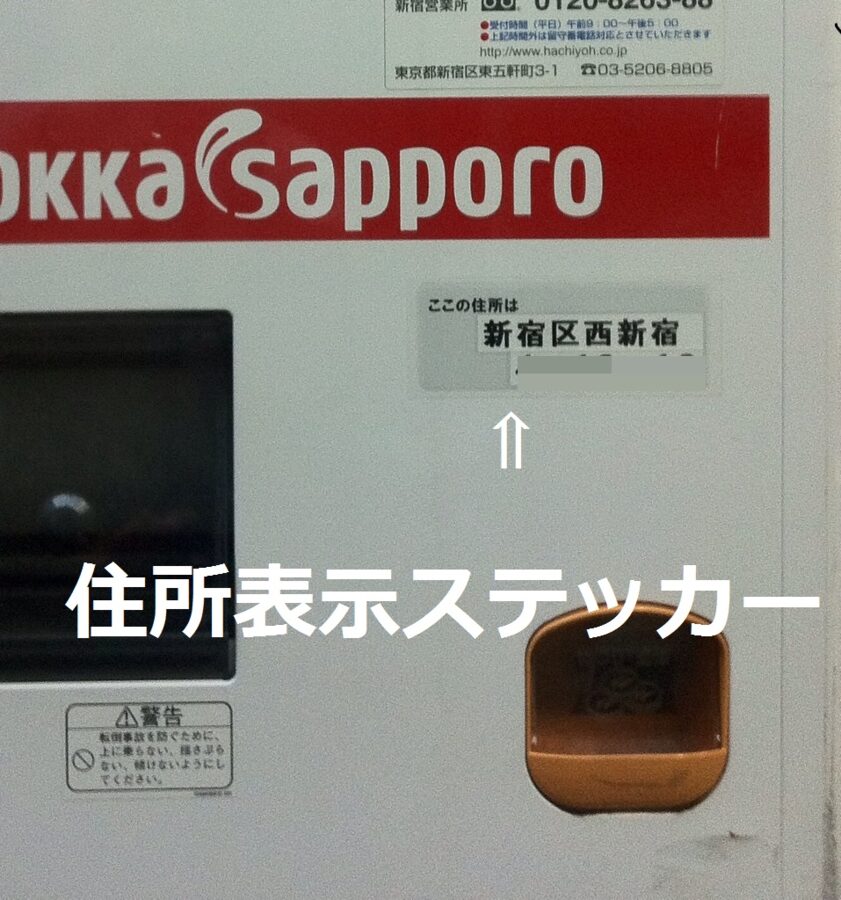
Then comes the address. The Tokyo Fire Department’s 119 guide says that outdoors you should give a landmark, and names vending machines with an address on them as one. A hotel name or a station exit number works too. Don’t hang up while the interpreter joins: the department warns that a caller who redials can go to the back of the queue.

#7119, when you are not sure you need an ambulance
#7119 is a medical advice line that tells you whether to call 119, get yourself to a hospital or wait. The Fire and Disaster Management Agency’s 2025 white paper lists 41 areas running #7119 by March 2026: all of 37 prefectures, including Tokyo (except its islands), Osaka, Kyoto and Fukuoka, plus parts of four more, such as only the Sapporo area in Hokkaido and only Nagoya in Aichi.
I would not count on English there. For advice in English, call the Japan Visitor Hotline below; for anything that looks serious, call 119 and let the dispatcher decide.
Your phone needs a voice line to reach 110
This is the part that bites people with a data-only eSIM. In Japan, a phone with no SIM cannot call 110, 119 or 118, says KDDI’s au handset manual, and a data-only plan has no voice service. Leave your home line switched on for calls, even with its data roaming off, and it can place an emergency call through a Japanese network. Otherwise your backups are the hotel phone and the nearest payphone.

118, #9110 and the koban
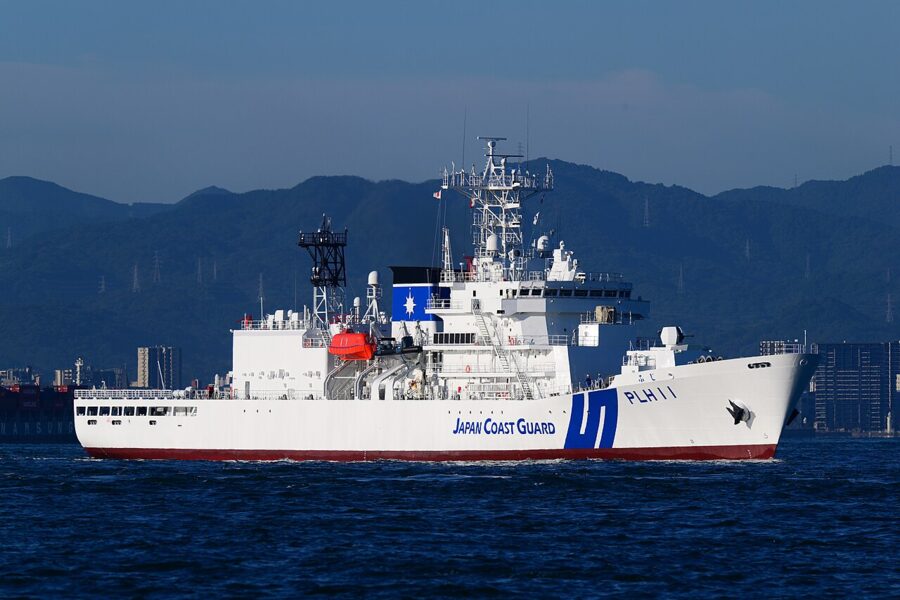

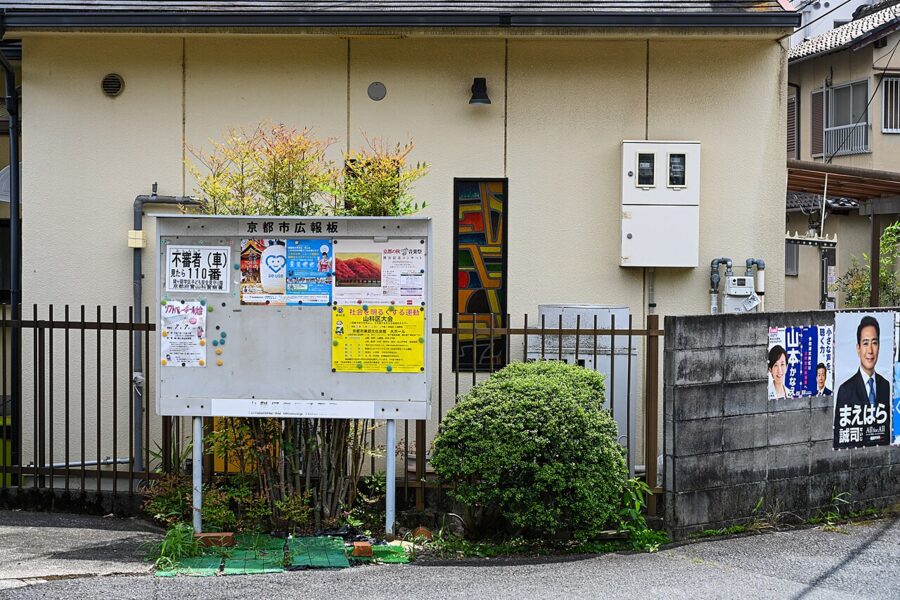
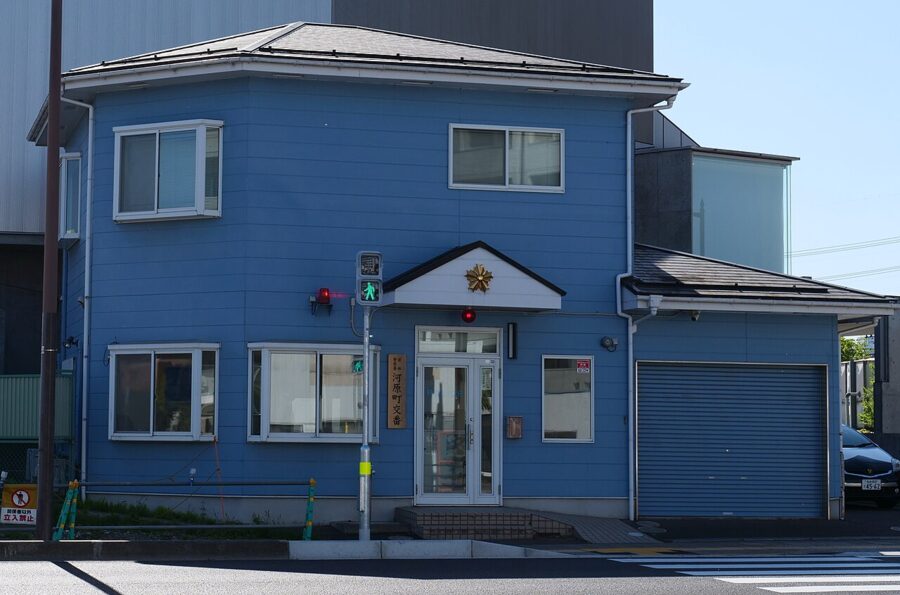
118 reaches the Japan Coast Guard, for a swimmer in trouble or a boat accident. #9110 is a police advice line for problems that are not emergencies, open on weekdays at hours each prefecture sets (8:30 a.m. to 5:15 p.m. is typical), and I would expect to need Japanese. For a lost wallet or directions, a koban (交番, police box) beats any phone call.
171 after an earthquake
When a big earthquake jams the lines, NTT opens the 171 Disaster Emergency Message Dial and announces it on TV, radio and its website. You dial 171 and a phone number in the affected area, and leave a message of up to 30 seconds that family can play back the same way. It is free from NTT East and West lines and from the free payphones set up at evacuation centers.
The Japan Visitor Hotline: the one number to save
The Japan National Tourism Organization runs the Japan Visitor Hotline on 050-3816-2787, or +81-50-3816-2787 in the format your phone wants. It answers 24 hours a day, 365 days a year, in English, Chinese and Korean, for accidents, illness and disasters as well as ordinary tourist questions.
It is a person to ask, not an interpreter for hire. JNTO’s emergency guide says that as a rule it won’t interpret on three-way calls or make reservations for you. It can tell you which nearby hospital takes foreign patients, or which number to call next. The 050 prefix means an internet phone line, not a toll-free one, so you pay your plan’s rate for the call.

Do you need a Japanese number?
Most visitors don’t. A data-only eSIM, a SIM card or a pocket Wi-Fi rental covers maps, messages and app calls, and your home line still gets your bank’s texts.
A Japanese number earns its cost when a restaurant booking form or a Japanese app insists on a 070, 080 or 090 number for a confirmation text, when couriers and clinics need to call you back, or on a work trip or long stay where people expect to phone you.
The options, as of November 2026
| Route | Japanese number? | Cost to start | Calls | ID |
|---|---|---|---|---|
| Your home SIM, roaming | No, your own | Your carrier’s roaming rate | Roaming rate | None |
| Mobal Japan Voice SIM | Yes | ¥4,950 (about US$32) SIM, then from ¥1,430 (about US$9) a month | ¥44 (about 28 US cents) a minute out, incoming free | Passport at pick-up |
| Sakura Mobile Voice + Data eSIM | Yes | Prepaid by trip length | Some domestic minutes included | Passport in person |
| JAL ABC rental phone | Yes, for the rental | ¥255 (about US$1.60) a day | ¥81 (about 52 US cents) a minute in Japan | At the counter |
A voice SIM or eSIM
Mobal’s Japan Voice SIM costs ¥4,950 for the SIM, then from ¥1,430 a month for voice only, up to ¥5,280 (about US$34) with 50 GB of data. Outgoing domestic calls are ¥44 a minute; incoming calls and texts in Japan are free, and there is no minimum term.
Mobal wants your full passport at pick-up, or an ID upload before it ships. Sakura Mobile’s prepaid Voice + Data eSIM, whose included domestic minutes depend on the rental length, is handed over only after an in-person passport check.
Renting a phone at the airport
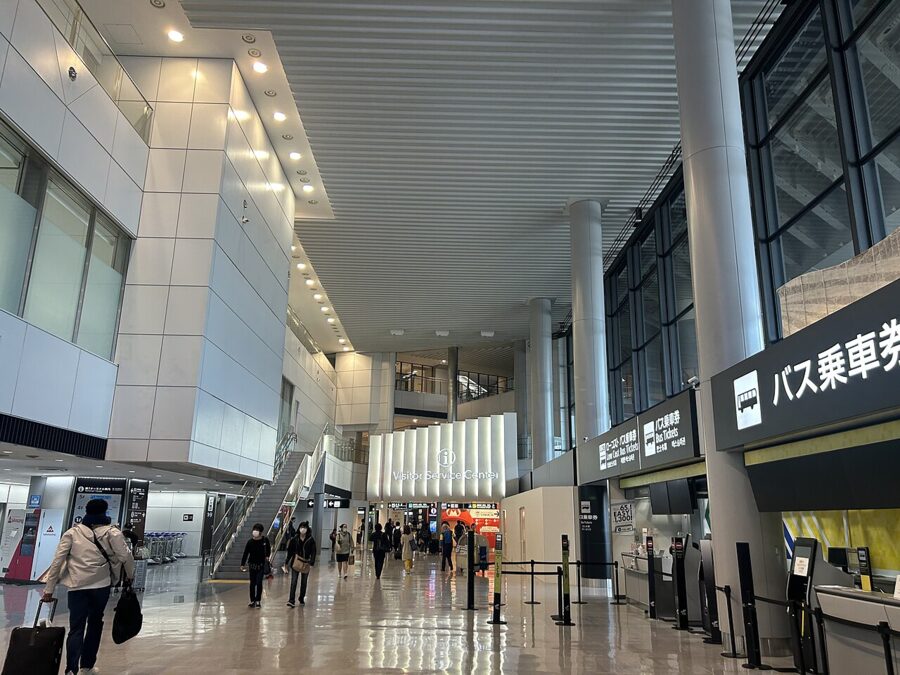
JAL ABC still rents plain phones with a Japanese number at its arrival-lobby counters in Narita Terminals 1 and 2, Haneda Terminal 3 and Kansai Terminal 1. Its rental phone page listed three plans in November 2026, all with no data.

| Plan | Per day | Per minute | Calls abroad? |
|---|---|---|---|
| Type-A | ¥255 | ¥81 | No |
| Type-B | ¥255 | ¥182 (about US$1.15), in Japan or abroad | Yes |
| Flat-rate calls plan | ¥500 (about US$3) | Included, domestic only | No |
Incoming calls are free on all three, even from abroad. You pay on return at the departure counter, and cancelling within three days of the start costs ¥1,000 (about US$6). I would rent one only for a specific job, such as a phone for a parent who won’t use apps. If you need data too, the airport pick-up counters for pocket Wi-Fi are close by.
Why a 050 app number won’t help
Since April 2024 a new 050 internet phone number comes with the same legal ID check as a mobile contract. It is no easier to get than a voice SIM, and it still fails the booking forms that want 070, 080 or 090.
The ID check, and what changes in 2027
Any Japanese line with voice, rented or bought, needs an identity check by law, which is why every option above asks for your passport. The ministry’s ID rule page says online contracts have required reading an ID’s IC chip since April 1, 2026. From April 2027 data-only SIMs come under ID checks too, and short-stay visitors may be covered, so check your provider’s page before a trip after March 2027.

Calling on LINE, WhatsApp and FaceTime
Between two people on the same app, an app call costs only the data: LINE to LINE, WhatsApp to WhatsApp, FaceTime between Apple devices. LINE is Japan’s everyday messaging app, so if you hire a guide or make a Japanese friend, swap LINE contacts. It belongs on any list of travel apps for Japan.
Calling an ordinary phone number from an app is another matter, and forum advice is out of date. LINE Out, which did exactly that, closed on May 31, 2023, and Microsoft retired Skype on May 5, 2025.
Will a restaurant or hotel pick up?
Not on WhatsApp. A restaurant’s number is a landline by the counter, and an app call can’t reach it. Hotels answer email or the booking site’s messages, and the front desk will usually phone a restaurant for you.

The one exception is LINE. Many Japanese shops and restaurants run a LINE official account, and can switch on LINE Call, a free voice or video call that only the customer can start. If a restaurant publishes a LINE Call link or QR code, that is your way in without a Japanese number.
Payphones: fewer every year, still worth knowing
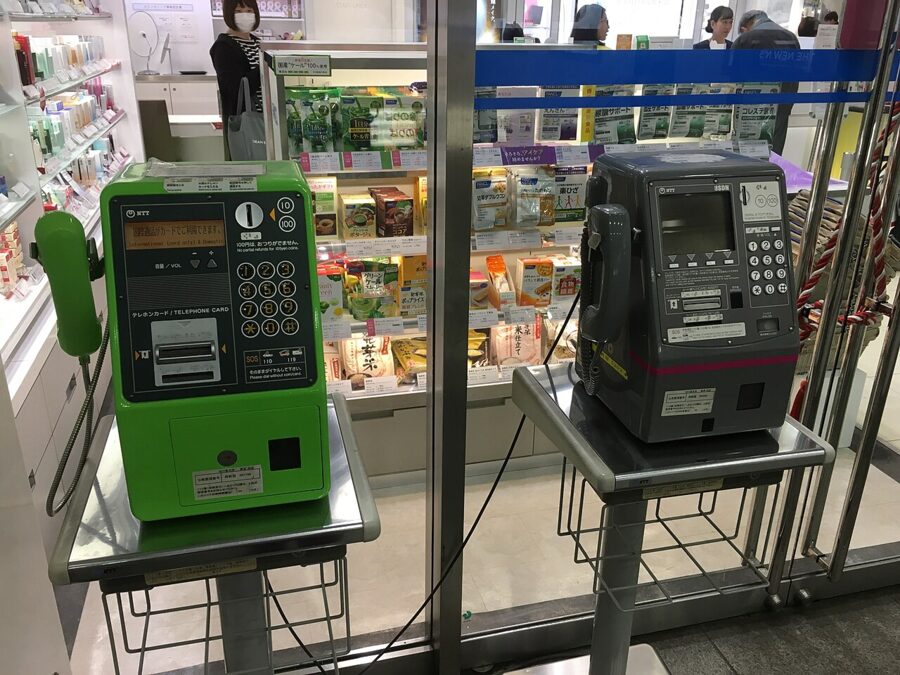
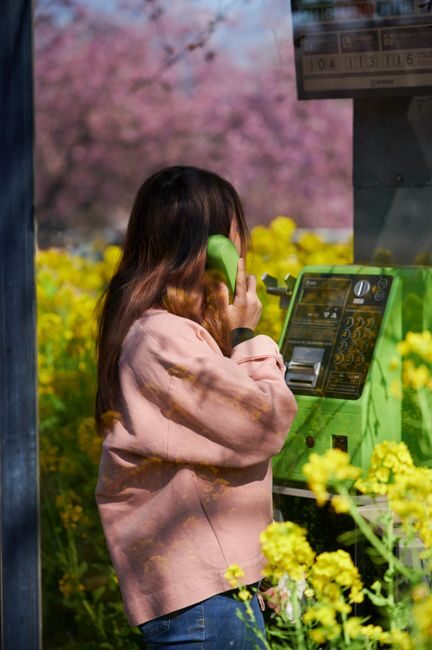
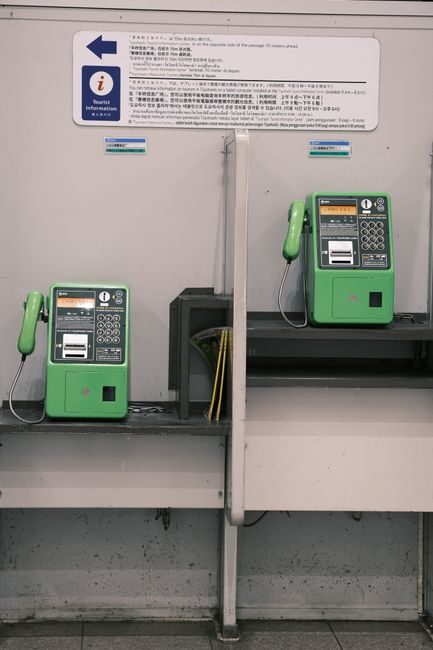
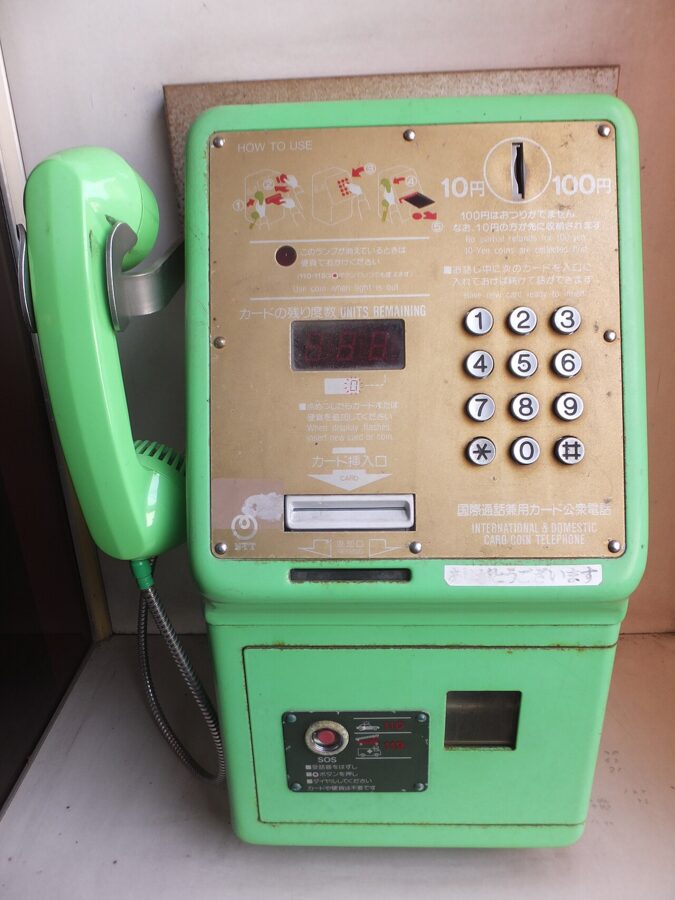
Japan’s payphones are green or gray, the gray ones being digital. Both take 10-yen and 100-yen coins and telephone cards, and a 100-yen coin gives no change.
On NTT East’s payphone tariff, in force since April 2014, ¥10 (about 6 US cents) buys 57.5 seconds of a local call between 8 a.m. and 7 p.m., and 77.5 seconds in the evening and at weekends. Longer calls and calls to mobiles burn coins much faster. Some convenience stores and station kiosks still sell telephone cards.
Emergencies, power cuts and disasters
Emergency calls need no money. On a green phone with a red button, lift the receiver, press the button and dial 110, 118 or 119; on any other phone just lift the receiver and dial, as NTT West’s payphone guide explains. Payphones take their power from the phone line, so most work in a blackout, though cards don’t.
After a major disaster NTT can make the payphones in the affected area free, and JNTO notes they tend to get through when mobiles don’t. That is the best argument for knowing where the nearest one is.
International calls from a payphone
Only some gray digital phones can dial abroad, and NTT East’s payphone FAQ says to look for “international calls available” on the display. KDDI ended its 001 international service from payphones on December 31, 2023, and I would not plan a call home around one.

Where they have gone
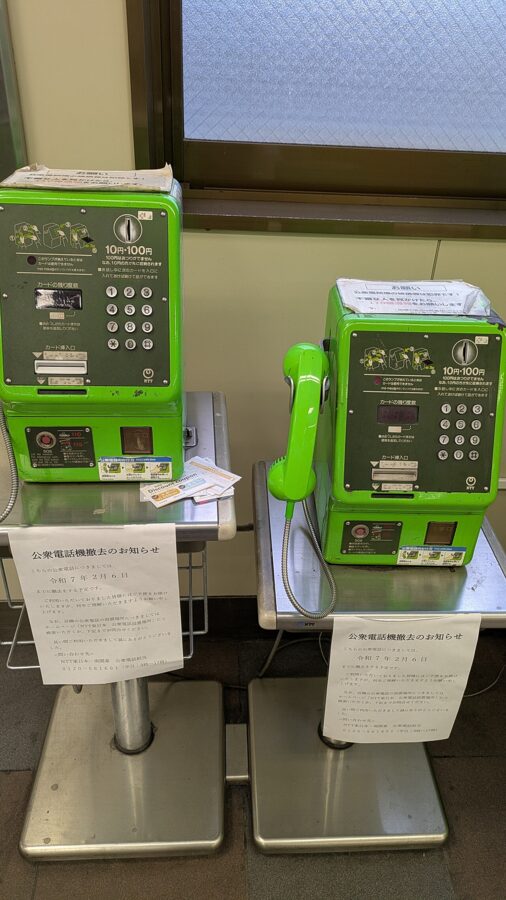
A 2022 rule change let NTT East and NTT West cut the number of payphones they must keep, and a station that had a row of them five years ago may now have one or none.

Before you fly
Open your contacts and fix the zeros. The hotel, the airport transfer, your travel insurer’s assistance line and 050-3816-2787 should all be saved as +81 with the leading 0 gone, so they dial correctly from any SIM, in any country, at 3 a.m. Then check that your phone will have a voice line in Japan, your own or a Japanese one, because 110 and 119 need it.